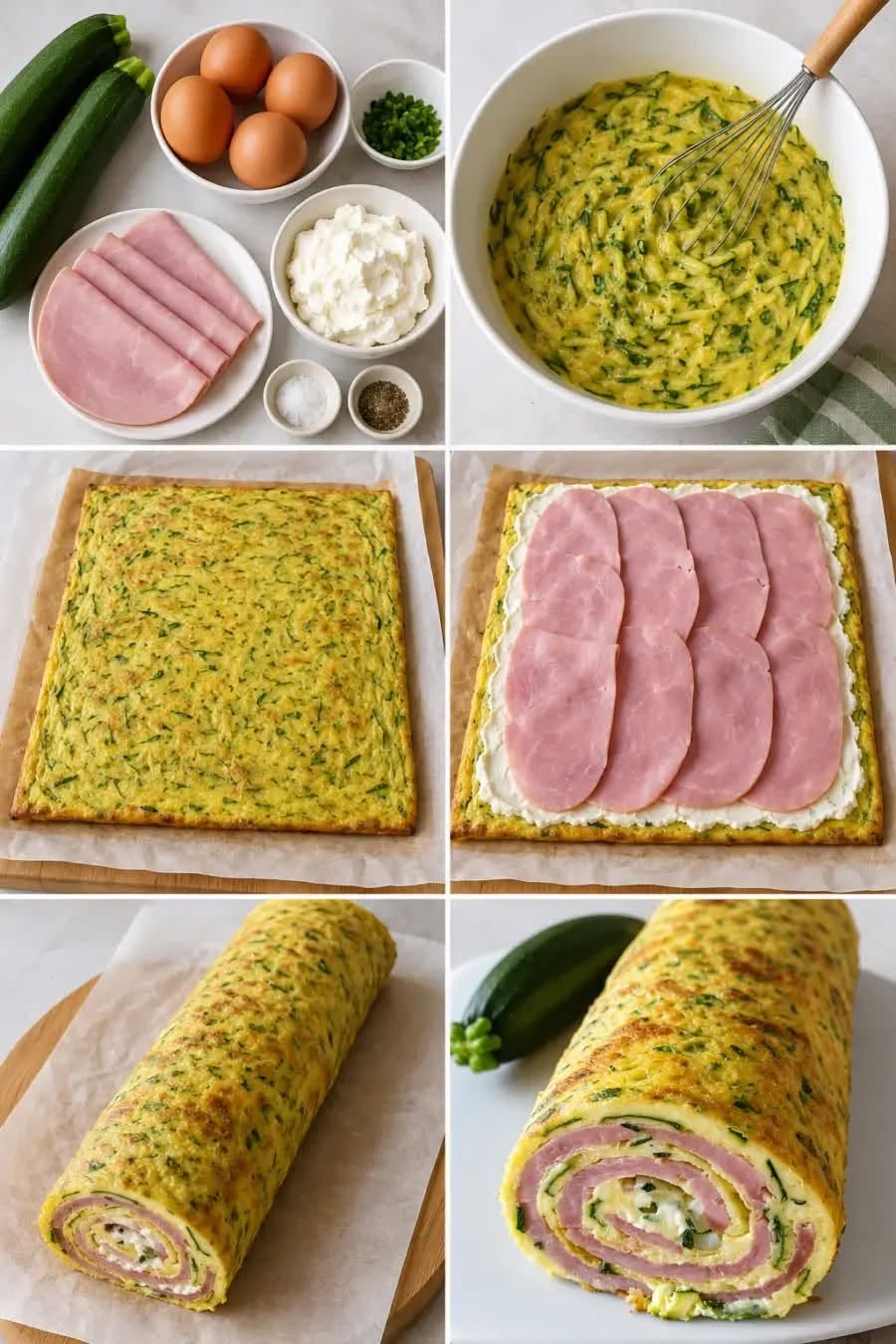
Why are these zucchini and ham rolls so popular?
Zucchini and ham rolls are one of those simple recipes that instantly make you want to sit down and eat. There's the soft zucchini base, the melt-in-your-mouth ham, the cheese that adds flavor and a light texture, and then the pretty spiral cut that gives it a polished look without requiring any special skills. It's precisely this contrast between the ease of preparation and the visual result that makes this recipe so popular.
This dish works particularly well when you're looking for a light meal idea, a slightly more festive hot starter, or even an evening meal served with a crisp salad. It offers a very pleasant mouthfeel: a soft, herby, lightly browned base that envelops a generous, savory filling. It slices easily and is presented with great elegance.
The appeal of zucchini and ham rolls lies in their balance. The zucchini adds freshness and a moist texture, the eggs provide structure, the cheese adds flavor and helps bind the whole thing together, while the ham creates the roulade's satisfying center. When prepared correctly, the base holds its shape well enough to be rolled without breaking, yet remains tender after baking. This perfect balance is what makes the recipe a success.
If you love family-style dishes that look beautiful without any technical difficulty, you've come to the right place. With a few precise steps, you'll achieve a golden, supple, and even roulade that's easy to slice into neat pieces. The secret isn't in a complicated technique, but in managing the moisture in the zucchini and using a well-balanced base.
What ingredients are needed for successful zucchini and ham rolls?
Quantities to expect
For a family-sized roll, expect to pay:
- 2 medium courgettes, or approximately 500 to 600 g before grating
- 3 eggs
- 80g of grated cheese, such as Gruyère or Parmesan
- 4 to 6 slices of ham depending on their size and desired thickness
- 1 small handful of fresh parsley or chives
- salt
- pepper
- 1 to 2 tablespoons of breadcrumbs or very light flour, only if the base releases a lot of water
- 1 tablespoon of crème fraîche or plain yogurt, optional, for a softer base
These quantities yield a balanced mixture, pliable enough to form a neat rectangle, yet structured enough to hold its shape when rolled. If you're preparing this recipe as an appetizer, it can serve several people depending on the portion sizes. For a light main course, serve it with a simple, fresh side dish.
The role of courgettes in the recipe
Zucchini is the key ingredient. It provides the base, the color, the moisture, and that light texture that makes this recipe so charming. A good zucchini should be firm, heavy for its size, and have smooth skin. Avoid overly large and spongy vegetables, which are often more watery and less flavorful.
The key thing with zucchini is moisture. When grated, they release a lot of juice quickly. If you don't drain them properly, the base will be too soggy, it won't cook as well, and it might break when you roll it. So it's a simple ingredient, but one that needs to be handled with care to achieve a flexible and reliable structure.
Eggs: the essential link
The eggs are essential for binding the zucchini together. They provide structure, help the base transform into a sort of soft, savory biscuit, and give a more even texture after baking. Without them, the mixture would lack cohesion and wouldn't be able to be rolled neatly.
Three eggs are usually enough to achieve a good balance between soft and firm. This is the right amount for the base to set without becoming dry or rubbery. The goal is a soft, but not runny, texture that can be easily lifted from the pan and then handled with care.
Grated cheese for flavor and texture
Grated cheese plays a dual role. It enhances the base's flavor with a rounder, richer note, and it also contributes to the structure by adding a bit of substance. Gruyère provides a mild, melting flavor, while Parmesan offers a more pronounced taste and a slightly drier texture, which is beneficial for strengthening the structure.
If you prefer a milder, more family-friendly roulade, Gruyère is an excellent choice. If you're looking for a more flavorful and assertive touch, Parmesan works very well, either on its own or mixed with other cheeses. In either case, it's best to use freshly grated cheese if possible, as it melts better and blends more seamlessly into the base.
Ham: a simple but effective garnish
The ham is what gives the roulade its heart, its salty touch, and its lovely pink color when sliced. It provides a melting texture that contrasts with the softness of the zucchini. Choose slices that are even and not too thick so they spread out well and roll easily.
Good-quality ham really makes a difference here. You don't need a fancy product, but it should be tender, supple, and pleasant to eat. Slices that are too thick will weigh down the spiral, while slices that are too thin will be lost in the mix. Ideally, you want a harmonious filling that's visible when sliced without overpowering the zucchini's flavor.
Fresh herbs for freshness
Parsley and chives add a very useful green note. They enhance the flavor of the zucchini and provide a fresh aroma that lightens the overall dish. A small handful is all you need: the goal isn't to mask the other ingredients, but to create a clean and pleasant aromatic finish.
Fresh herbs also add visual vibrancy. In the sliced roulade, they create small green dots that hint at a homemade recipe, simple yet carefully prepared. It's a subtle detail, but very much appreciated on the plate.
Salt, pepper and optional little extras
Salt and pepper are essential for seasoning the base before cooking. Pepper adds a subtle kick, especially if you're using Gruyère or Parmesan. Use it sparingly, as the ham and cheese already contribute their own saltiness.
If your zucchini releases a lot of water, a teaspoon of flour or breadcrumbs can help strengthen the base. Keep it light: the goal isn't to make it dense, but simply to give it a little extra structure. Similarly, a spoonful of crème fraîche or plain yogurt can be added for a creamier texture, but it's not essential. Used sparingly, this little touch adds moisture without weighing down the recipe.
Can some ingredients be substituted?
Yes, provided you maintain the desired texture. If you don't have Gruyère, another grated cheese that melts well will work. Parmesan is drier and more aromatic, so it's a good addition, but if you use it on its own, be careful not to add too much salt.
As for herbs, parsley and chives are the simplest and most suitable, but you can choose either one depending on what you have on hand. The important thing is to maintain a fresh note that complements the zucchini.
For the ham, choose classic slices of cooked ham for a very family-friendly version. If you prefer a slightly stronger flavor, you can also opt for a more aromatic ham, provided it remains tender and easy to roll. On the other hand, avoid fillings that are too fatty or too moist, as these will make assembly difficult.
If you're looking for a slightly lighter version, the crème fraîche can be replaced with a small amount of plain yogurt. This maintains the moistness without making the base heavy. However, eggs are difficult to replace here as they are essential to the structure of the cake.
Why thoroughly draining zucchini makes all the difference
This is the most important point in the recipe. Grated zucchini contains a lot of water, and this water can compromise the roulade's structure. If the base is too moist, it cooks less evenly, doesn't brown as well, and becomes fragile when unmolding. In the worst-case scenario, it will split or tear while rolling.
Thoroughly squeezing the zucchini dry results in a more pliable, even, and easier-to-handle base. This simple step transforms a slightly messy preparation into a neat and elegant result. For a successful roulade, think of the zucchini as a light dough: it should be moistened just enough, but not soggy.
This careful attention to detail explains why the recipe remains easy without being imprecise. By removing excess water at the right moment, you're already setting the stage for success. The base will have a beautiful golden color, sufficient firmness, and a pleasant texture that is both tender and stable.
What equipment should I need before starting?
Useful utensils
To work comfortably, prepare:
- a grater or a food processor for the courgettes
- a large salad bowl
- a clean cloth or a cheesecloth to wring out the courgettes
- a cooking plate
- baking paper
- a spatula or a spoon to spread the mixture
- a sharp knife for the final cut
Simple equipment is perfectly sufficient. The most important thing is to have a sheet large enough to form a regular rectangle. The more evenly the base is spread, the easier it will be to roll later.
The correct license plate format
The base should be neither too thick nor too thin. If it's too thick, it will be harder to roll and won't cook as evenly. If it's too thin, it will lack flexibility and may break. The goal is to create a regular rectangle, wide enough to accommodate the ham without excessive overlap, but thin enough to remain moist.
This format is also important for the final appearance. A well-executed rectangle allows for a regular spiral when sliced, with a clear alternation between the zucchini base, the pink ham, and the green herbs. This is what gives the dish its appetizing and elegant look.
What you need to prepare in advance to save time
Before you begin, wash the zucchini, prepare your herbs, and bring the eggs to room temperature if possible. The more prepared the ingredients are, the easier the assembly will be. Also, make sure your baking sheet is ready with the parchment paper already in place, so you can quickly spread the base once the mixture is ready.
The ham should also be ready to be arranged immediately. Since it will be placed on a still-soft base, it's best not to improvise the assembly at the last minute. This simple preparation avoids hesitation and reduces the risk of the ham cooling or drying out before being rolled.
If you like recipes that make a beautiful impression when sliced, you'll love this one. The contrast between the lightly golden surface, the pink and yellow swirls, and the touches of green herbs creates a very appealing effect, without any technical complexity.
The complete preparation awaits you on the next page.
read more in next page