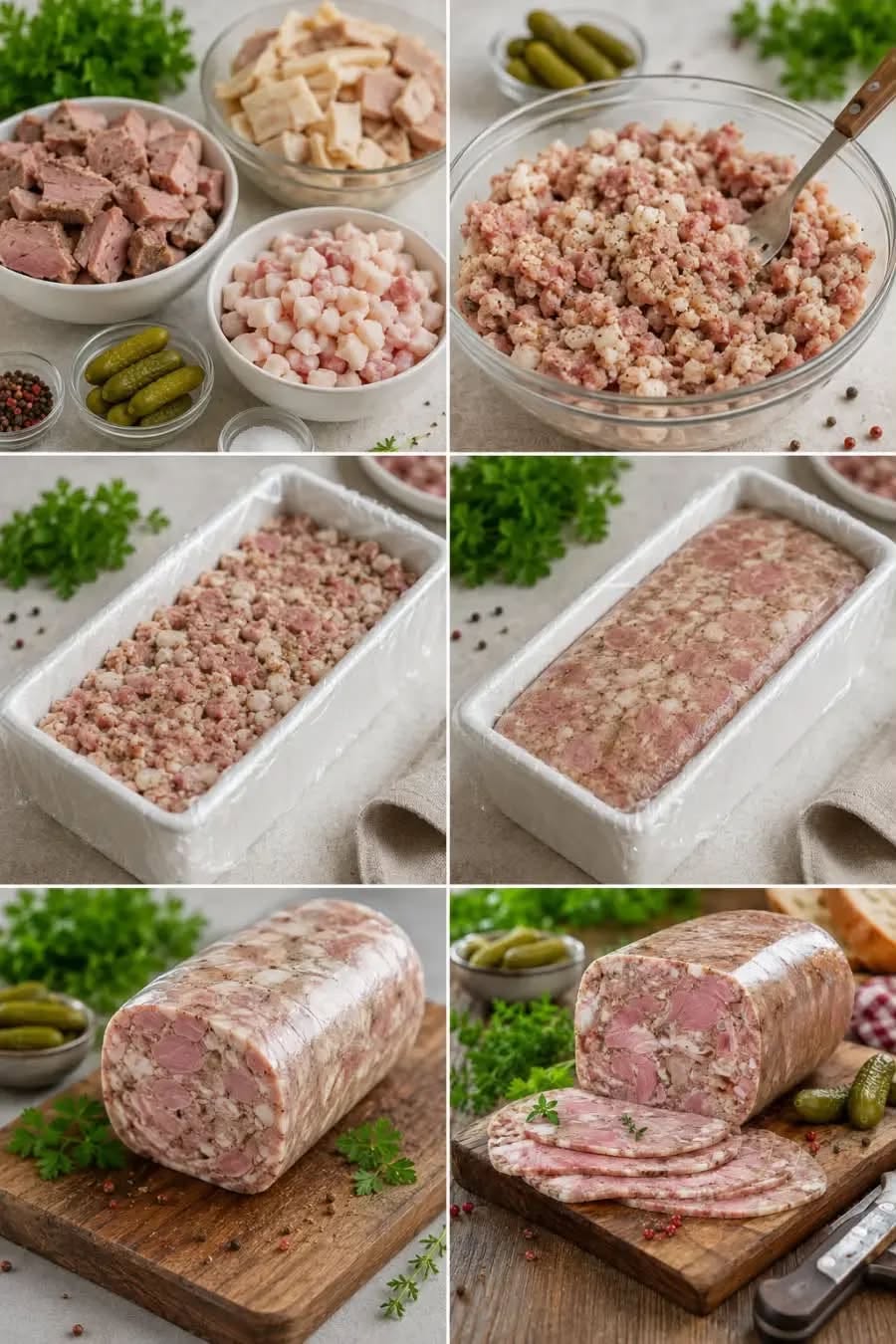
Why is this terrine so popular?
Homemade pork terrine has that certain charm of simple dishes that always make an impression. It's prepared with readily available ingredients, requires no particular technical skill, and after cooking and resting, transforms into a generous, flavorful, and easy-to-slice terrine. It's exactly the kind of recipe you like to have on hand when you want to offer a delicious cold appetizer, a stress-free lunch, or a family buffet that's sure to please.
What makes it so enjoyable is the balance between the tenderness and the texture. The pork provides a moist and flavorful base, the slightly fattier cuts add juiciness, while the ground meat ensures a more even texture. Onions, shallots, garlic, and fresh herbs create a bold yet balanced aroma. And then there's the generous amount of pepper, which adds depth without overpowering the meat's flavor.
This terrine isn't meant to impress with complexity. It's meant to be good, clean-tasting, well-seasoned, and reliable. If you're looking for a comforting homemade charcuterie that can be prepared in advance, this homemade pork terrine ticks all the boxes.
What makes a good pork terrine successful
A successful terrine relies on three very simple things: well-chosen meat, just the right seasoning, and gentle cooking. Nothing spectacular, but everything counts.
The first key is texture. A terrine that's too fine becomes pasty, almost smooth, and loses its rustic character. Conversely, meat that's too coarse can result in a crumbly texture. The goal is therefore to obtain a homogeneous preparation, but still slightly textured, with a pleasant graininess.
The second key is the ratio of lean to fat. Pork needs some fat to remain moist after cooking. Without it, the terrine becomes dry and dense. With just the right amount, it stays tender, melts in your mouth, and is juicy.
The third key, finally, is cooking in a bain-marie. This cooking method envelops the terrine in gentle, even heat. It prevents overcooked edges, limits drying, and allows the terrine to set without being too harsh. This helps to achieve a clean slice, a stable texture, and a beautiful presentation when serving.
What ingredients are needed for a fragrant homemade pork terrine?
For a terrine serving approximately 8 to 10 people, you will need:
- 800g of pork in total, a mix of lean and slightly fattier cuts
- 400g minced pork
- 400g of pork, cut into small pieces or more coarsely chopped
- 2 medium onions or 3 shallots
- 2 cloves of garlic, according to your taste
- 2 to 3 tablespoons of chopped fresh flat-leaf parsley
- 1 small sprig of thyme, leaves removed, optional but nice
- 1 to 1.5 teaspoons of ground black pepper, or even a little more if you like a well-spiced terrine
- 14 to 16 g of fine salt, adjust with caution
- 60g of breadcrumbs or breadcrumbs
- 6 to 8 cl of water or cold stock to bind and soften the stuffing
This proportion yields a well-balanced terrine, neither too dry nor too soft, with a pronounced pork and herb flavor. Breadcrumbs or breadcrumbs support the preparation: they absorb some of the juices and help stabilize the texture when sliced. A small amount of liquid helps to homogenize the stuffing and prevent it from becoming too dense.
Pork: the basis of texture and taste
Pork is the key ingredient in this homemade pork terrine recipe. Ideally, you should combine lean meat with a more marbled or fattier cut. This combination creates a flavorful, tender, and satisfying terrine.
If you choose only lean meat, the terrine is likely to be denser and less flavorful. With a little fat, on the other hand, it becomes more melt-in-your-mouth and retains a better mouthfeel after resting.
You can ask your butcher for a terrine mix, or choose suitable cuts yourself. The idea is to have a fairly uniform base, without excess gelatin or sinewy bits.
Onions, shallots and garlic: aromatic depth
The onions or shallots add a subtle sweetness, almost caramelized after cooking. They give the terrine a rounder and warmer flavor.
Garlic, however, remains optional. It's not essential, but a small amount adds a more vibrant and distinctive note, especially if you enjoy terrines with a strong flavor. It's best to use it sparingly: the garlic should complement the meat, not overpower the other flavors.
For a milder version, opt for shallots. For a more rustic and flavorful terrine, onions work very well.
Parsley and thyme: the refreshing touch
Flat-leaf parsley adds a welcome touch of freshness to a pork terrine. It provides a crisp, green note that balances the richness of the meat. It also makes the slices more visually appealing.
Thyme is optional, but it works very well with pork. Its presence should be subtle, almost in the background. It complements the other herbs without weighing down the recipe.
If you have very fresh, bright green, and fragrant parsley, don't hesitate to use plenty. In this recipe, the herbs aren't just decorative; they truly structure the flavor.
Black pepper: the signature of the recipe
Black pepper is an essential ingredient here. It's used liberally, but not excessively. It should give the terrine its character, that slightly warm and aromatic sensation that enhances the pork.
If you prefer bolder flavors, use freshly ground pepper. Its aroma is more vibrant and precise. A well-peppered pork terrine often has more depth than a version that is too timidly seasoned.
Salt: a precise amount for a perfect terrine
Salt plays a vital role in both the taste and the consistency of the dish. It helps the meat to season evenly and contributes to the final texture.
It's important to measure it carefully. A terrine that's too dry will taste bland, while too much salt is irreparable. It's best to start with a reasonable amount, evenly distributed, and then adjust to your taste for future batches.
Breadcrumbs or breadcrumbs: the discreet binder
Breadcrumbs, or finely ground breadcrumbs, are used to absorb excess moisture and give the stuffing more cohesion. They should not obscure the meat. Their role is technical, but useful: they help the terrine hold its shape when sliced while retaining its moistness.
If you're using breadcrumbs, choose ones without a hard crust and crumbled finely. Plain breadcrumbs also work very well, provided you don't use too much, so as not to make the texture heavy.
Water or broth: just enough to soften it.
A small addition of cold liquid may seem insignificant, but it helps the stuffing to bind together. This makes the mixture more pliable and prevents it from becoming too dense.
Water is sufficient, but a little cold stock can add an extra touch, provided it's simple and not too salty. Here, restraint is key to letting the meat and herbs shine.
Can some ingredients be substituted?
Yes, but in moderation. This terrine works thanks to a simple base, so it's best to avoid overly drastic substitutions.
If you don't have shallots, substitute a small, finely chopped sweet onion. If you're short on flat-leaf parsley, a little chervil can add a fresh note, but use it sparingly. The thyme can be omitted if you prefer a purer-tasting terrine.
For the meat portion, the most important thing is to maintain a good balance between lean and fat. If your cut of pork is too dry, compensate with a richer cut. Conversely, if it's very marbled, go easy on the added fat.
Breadcrumbs can be replaced with lightly crumbled bread. However, it's best to avoid overly thick binders, which would alter the texture and result in a less authentic terrine.
What equipment should I need before starting?
To successfully make a homemade pork terrine without stress, the equipment is just as important as the ingredients.
First, you'll need a rectangular mold, ideally a terrine or loaf tin, deep enough to hold the mixture without it overflowing. Line it with parchment paper to make unmolding easier and ensure a cleaner cut.
You will also need a large mixing bowl for the stuffing, a sharp knife for chopping the meat and herbs, and a meat grinder or food processor if you want to refine the texture. A cooking thermometer can be useful, especially if you like precise cooking, but it's not essential.
Finally, a larger dish will be needed for the water bath. Gentle oven cooking simply requires placing the mold in a container filled with hot water, which protects the terrine from direct heat.
Prepare the ingredients before heading into the kitchen
Before you begin, take the time to organize everything. This makes the recipe run more smoothly and prevents you from forgetting anything.
Cut the meat according to the desired texture: some in chunks and some already minced, to maintain a consistent grain. Peel the onions or shallots, then finely chop them so they blend well into the mixture. Chop the parsley, remove the thyme leaves if using, and mince the garlic very finely.
Weigh the salt precisely and measure the black pepper accordingly. Also prepare the breadcrumbs or breadcrumbs, as well as the small amount of cold liquid required for binding.
As for the mold, line it carefully to facilitate unmolding and ensure clean edges. It's a simple detail, but it greatly changes the final appearance of the terrine.
This advance preparation allows you to proceed without rushing. A homemade pork terrine recipe always benefits from being made calmly: it's the best way to obtain a consistent texture, a well-distributed flavor, and a real pleasure when slicing.
The complete preparation awaits you on the next page.
read more in next page