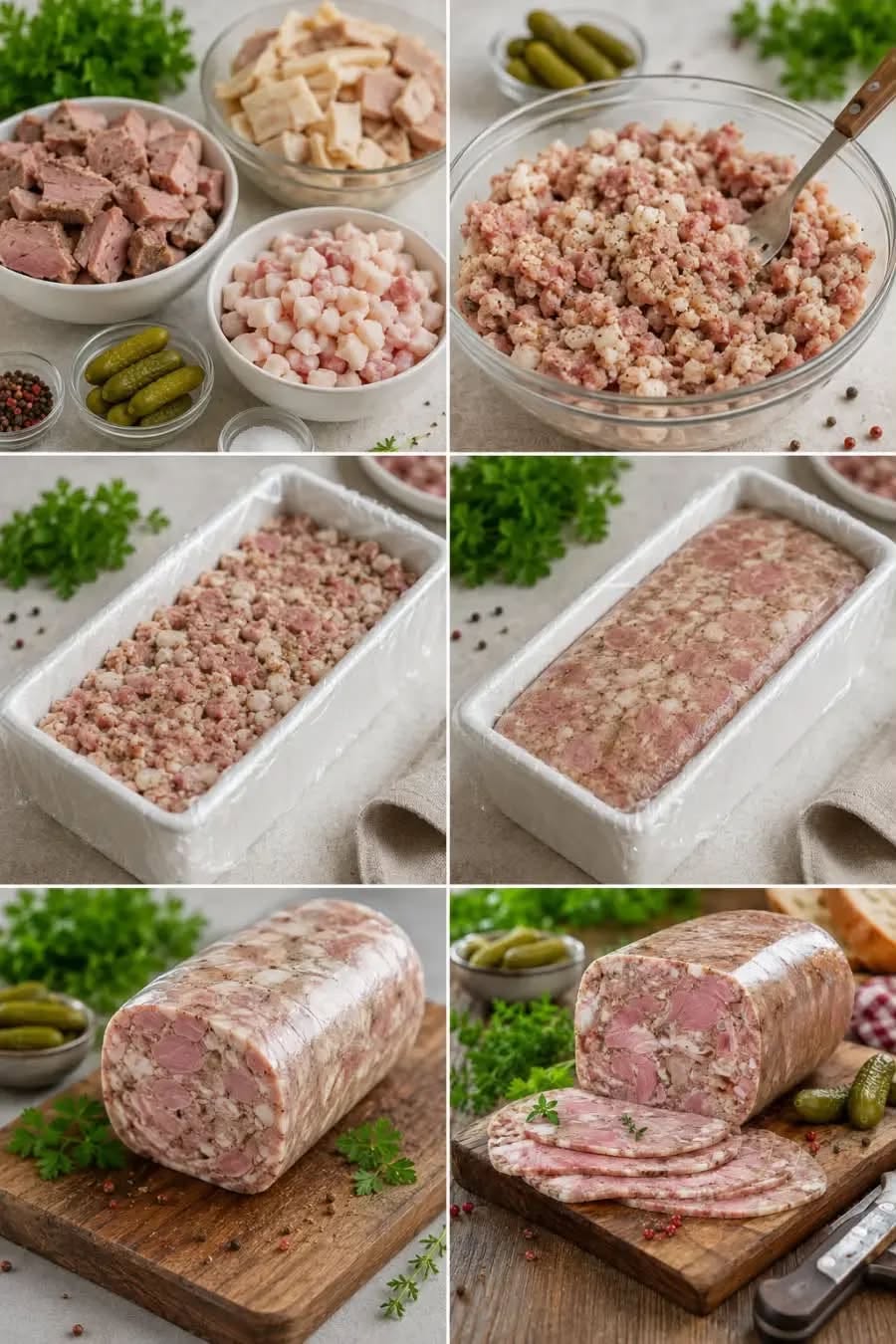
Step-by-step recipe preparation
Prepare the stuffing without making it too smooth.
Start by checking that everything is completely cold, especially the meat. This is an important detail: a cold stuffing mixes better, holds its shape well, and results in a cleaner terrine when sliced.
If you have pieces of pork that need to be coarser ground, use a meat grinder with a medium die or pulse them in a food processor. The goal isn't to achieve a smooth paste, but rather a consistent texture with a slight graininess. It's this light texture that gives a homemade terrine its charm.
In a large bowl, combine the ground pork, the prepared pieces, the finely chopped onions or shallots, the crushed garlic (if using), the chopped parsley, and the thyme leaves. Add the salt, black pepper, and breadcrumbs or crumbled bread. Then gradually pour in the cold water or stock.
Mix with clean hands or a sturdy spoon for a few minutes, just until well combined. The stuffing should become pliable, slightly sticky, and well-bound, without being soggy. If it seems too dry, add a teaspoon of liquid. If it seems too soft, let it rest for 5 to 10 minutes: the breadcrumbs will absorb the moisture.
Press the mixture into the mold
Line your rectangular mold with baking paper, letting it overhang slightly on the edges. This small excess will be very useful for unmolding the terrine without damaging it.
Transfer the stuffing to the mold, packing it down as you go. Press firmly in the corners to avoid air pockets. It's a simple but essential step: a well-compacted terrine slices better and keeps a nice shape.
Once everything is in place, smooth the surface with the back of a spoon or a spatula. It should be even, without any hollows. You can tap the mold on the work surface once or twice to release any air bubbles. The surface should remain firm, but not flattened.
Cook gently in a bain-marie
Preheat the oven to 160°C (325°F), conventional oven if possible. Place the mold in a large, deep baking dish and pour hot water around it, filling the dish about halfway up the sides. The water bath should surround the terrine without submerging it.
Bake for approximately 1 hour 15 minutes to 1 hour 40 minutes, depending on the height of the mold and the density of your mixture. Gentle cooking is the key to a moist homemade pork terrine. If your oven is very hot, lower the temperature slightly: consistent heat is better than excessive heat that will dry out the edges.
At the end of cooking, the terrine should be firm to the touch, with a set but still tender center. A knife inserted into the middle should come out hot and clean, with clear, not runny, juices. The top may be lightly golden, but it should not be heavily browned.
Allow to cool, then firm up in the refrigerator.
Remove the terrine from the oven and let it cool in its mold for about 30 minutes. This step prevents thermal shock and helps the preparation stabilize without breaking.
Next, carefully remove the mold from the water bath and let it cool completely to room temperature. Once the terrine is no longer hot, refrigerate it for at least 6 hours, ideally overnight.
For an even cleaner cut, you can place a small weight on the terrine once it's cold, well wrapped, or protected. It's not essential, but it often helps it hold its shape and produces more even slices.
Recognizing a successful terrine
A well-made pork terrine is easy to spot. When sliced, it should be compact yet supple, with a pale to slightly deep pink color depending on the meat used. It should have a fine, even grain, never a dry or brittle texture.
On the nose, it gives off a distinct aroma of pork, pepper, and fresh herbs. On the palate, the sensation should be tender and melt-in-your-mouth, with enough firmness to hold its shape without crumbling. If it's too compact, it was probably packed too tightly or overcooked. If it lacks firmness, it likely wasn't left to rest long enough.
Mistakes to avoid
The first mistake is over-mixing. A stuffing that's too smooth results in something closer to a paste than a proper terrine. Always keep some texture.
The second mistake is adding salt haphazardly. Salt gives structure to the preparation, so it must be measured precisely. Too little, and the terrine will be bland; too much, and it will become overpowering and mask the taste of the pork.
The third mistake is overcooking. A properly controlled water bath ensures even cooking. If the temperature is too high, the fat melts too quickly, the texture becomes too firm, and the terrine becomes drier.
The final mistake is slicing too soon. A terrine that's still warm lacks structure. Chilling it really makes all the difference for a clean, precise cut.
Chef's tips for a better outfit
If you prefer a more rustic terrine, lightly chop some of the pork pieces rather than blending them all. This will give you a more textured mouthfeel.
To enhance the tenderness, choose a mixture of lean and slightly fattier meat. This delicate balance prevents dryness.
If you're worried about the filling not holding its shape, let it rest for about ten minutes before pouring it into the mold. The breadcrumbs will absorb some moisture and the mixture will be more stable.
Finally, for a more pronounced flavor, add the thyme sparingly. It should complement the pork flavor, not overpower it.
Similar variations to the recipe
You can adjust the terrine to your liking without changing its essence. If you prefer a more vegetal note, slightly increase the parsley. If you prefer a more traditional version, add a little more black pepper.
For a slightly more rustic texture, replace some of the minced pork with slightly larger pieces. The cut will be less fine, but very satisfying.
If you don't have stock, cold water works perfectly. It mainly serves to soften the stuffing and help the mixture bind together.
How to serve homemade pork terrine
Serve it chilled, cut into even slices about 1 cm thick. This is how it best reveals its texture and softness.
It's delicious with country bread, a little mild mustard, or gherkins, but it's also perfectly satisfying on its own as a simple and generous starter. For the plate, add a few fresh parsley leaves: the touch of green contrasts beautifully with the pink, delicately peppered terrine.
For a light lunch, serve it with a crisp salad or some still-warm steamed potatoes. At a buffet, it fits easily alongside other cold dishes, as it cuts neatly and transports well.
Storage and preparation in advance
This homemade pork terrine is ideal to prepare the day before. Resting in the refrigerator even improves its texture and taste.
Keep it cool, well covered, either in its mold or unmolded and wrapped. It will generally keep for 3 to 4 days in the refrigerator without any problem if it is well protected.
Freezing is possible once the terrine is completely cooled, but the texture may become slightly less smooth after thawing. For a perfect slice, refrigeration remains the best option.
Approximate nutritional value
A reasonably sized slice will provide approximately 200 to 250 kcal, depending on the quality of the pork and the thickness of the slice. The terrine is primarily a source of protein, with some fat and a moderate amount of carbohydrates from the breadcrumbs.
It is a nourishing dish, practical for a cold meal, and more interesting than you might imagine when served with a simple and fresh garnish.
FAQ
How can you tell if a pork terrine is cooked?
The terrine is cooked when the center is set, firm to the touch, and a knife inserted into it comes out hot with clear juices. It should no longer be wobbly in the middle, but remain pliable. Gentle cooking in a water bath prevents it from drying out.
Why is my pork terrine dry?
A dry terrine often results from overcooking, an oven that's too hot, or meat that's too lean. The right balance between lean and slightly fatty cuts helps maintain its moistness. Chilling the terrine won't correct overcooking, hence the importance of careful monitoring.
Can the pork terrine be prepared the day before?
Yes, and it's even recommended. A night in the refrigerator firms up the texture, makes unmolding easier, and allows for cleaner slices. It's the best solution if you want to serve the terrine as an appetizer, at a buffet, or for a pre-prepared cold meal.
Should the pork terrine be served cold or lukewarm?
It is served cold, or slightly chilled, never hot. Cold enhances its texture, grain, and peppery seasoning. If it is too warm, it slices poorly and loses some of its beautiful structure.
Can breadcrumbs be substituted in a pork terrine?
Yes, breadcrumbs work very well as a substitute for breadcrumbs. They provide the same binding effect and help maintain a tender texture. The most important thing is not to use too much, so as not to make the stuffing heavy or mask the pork flavor.
Conclusion
This homemade pork terrine with herbs and pepper has everything going for it: simple preparation, gentle cooking, and a beautiful texture after resting. Serve it chilled, slice it carefully, and you'll have a generous, fragrant, and truly comforting starter. If you like recipes that can be prepared in advance, keep this one handy: it deserves to be made often.
read more in next page