If a container shows widespread mold, extensive deterioration, or a strong, unpleasant odor, it is generally safest to discard it.
A moldy berry can quickly affect neighboring berries, as they are very close together.
That's why it's helpful to inspect the berries regularly after bringing them home.
Remove damaged fruit promptly and keep the remaining berries dry and refrigerated.
Why viral videos make this seem terrifying
There is a psychological reason why these videos spread so quickly.
Most people don't expect food to move.
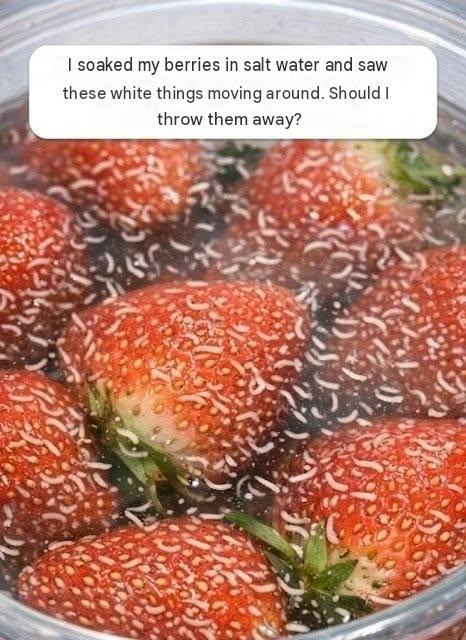
When someone pours salt water on strawberries and suddenly sees tiny white creatures wriggling in the container, the reaction is, naturally, emotional.
The images are amazing.
It's unpleasant.
And it makes viewers question something they previously considered completely harmless.
That makes it perfect for social media.
But a video with a strong emotional charge is not necessarily a complete explanation.
A short video rarely tells you everything:
* where the fruit came from,
* how long was it soaking,
* What salt concentration was used?
* which organisms were actually present,
* if all the berries were affected,
* or if the fruit was spoiled for some other reason.
Without that information, it's easy for viewers to draw conclusions that the video itself doesn't support.
So, should you throw away the berries?
The answer depends on what you found.
If you notice some suspicious organisms after soaking fruit that is otherwise fresh, don't assume the entire container is dangerous.
Examine the berries carefully.
If most are firm, fresh, and show no visible signs of spoilage, remove any fruit that looks suspicious and rinse the rest thoroughly with clean running water before eating.
However, if the container contains numerous larvae, extensive insect damage, mold, spilling fruit, foul odors, or general deterioration, discarding the entire container is a reasonable option.
When you're unsure about the safety of a food item, especially if it appears to be badly spoiled, it's best to be cautious.
Foods are replaceable.
Your health is more important.
## The most important lesson
The strange sight of tiny white creatures emerging from strawberries can certainly be unsettling.
But that doesn't mean strawberries are secretly full of dangerous worms or that you should stop eating fresh fruit.
It is a reminder that the food we consume comes from living agricultural environments.
Insects exist.
Plants have imperfections.
The fruit may be damaged.
And sometimes, something unexpected can be hidden where we least expect it.
The best response is not panic.
This is about informed food handling.
Inspect your fruits and vegetables when you buy them. Refrigerate berries properly. Wash them under clean running water before eating them. Remove any damaged or spoiled pieces. And if a package looks heavily contaminated or deteriorated, don't take unnecessary risks: throw it away.
So if you ever soak strawberries and notice tiny white creatures wriggling in the water, take a deep breath.
You haven't necessarily discovered a dangerous food safety catastrophe.
You may have simply stumbled upon one of the less glamorous realities of consuming fresh produce.
And perhaps the most useful lesson is not "never eat strawberries".
This is it:
**Know what you're seeing, understand its meaning, and make food choices based on evidence, not fear.**