Do you have a jar of honey in your cupboard, but aren't sure what's inside? You're not alone. Between reassuring labels and tempting prices, it's increasingly difficult to know if you're buying an authentic product or a diluted mixture with sugar syrup. Good news: there are simple home tests that can give you valuable clues. And the first one requires no equipment.
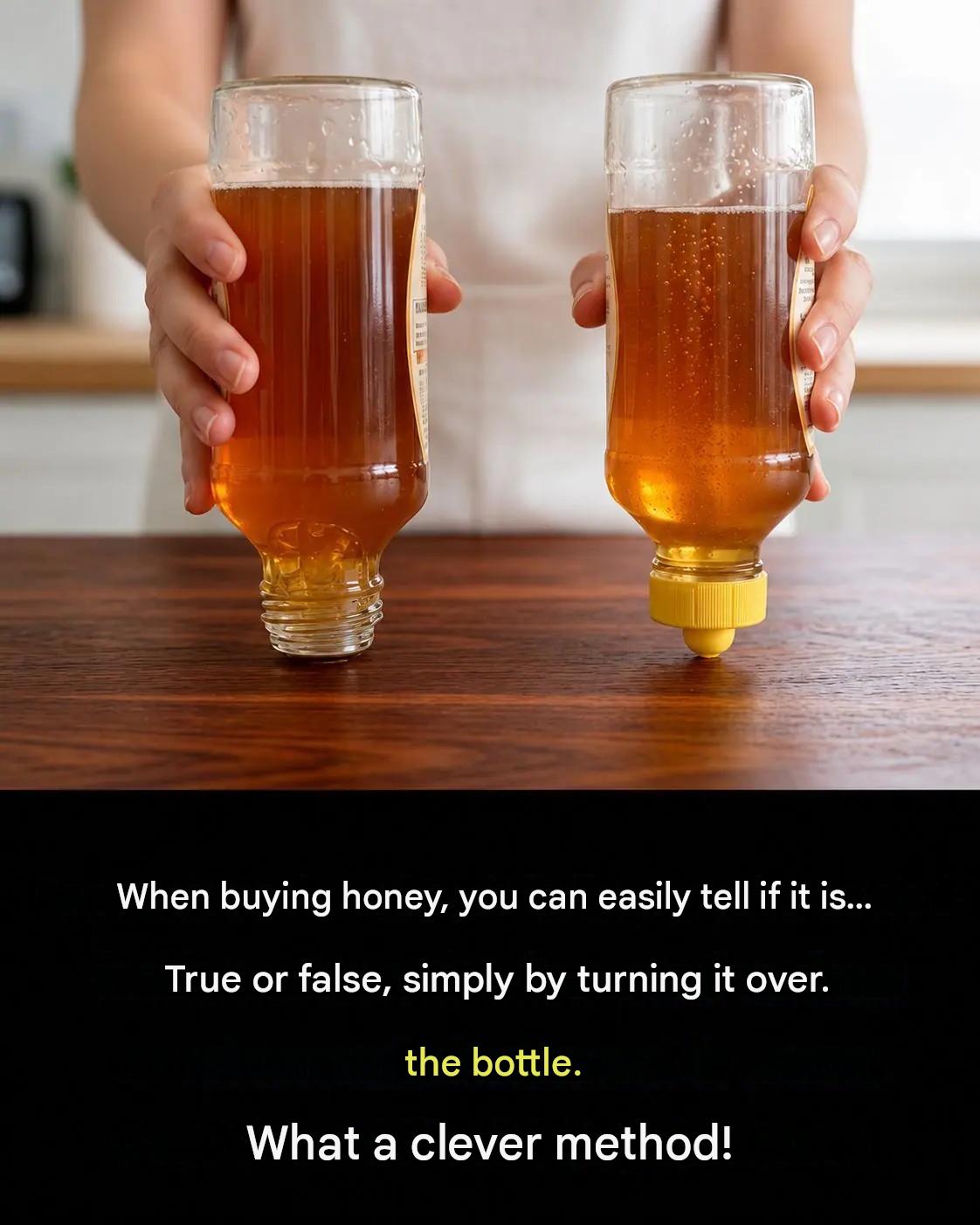
The upside-down bottle test: simple, quick and amazing.
Do you have your jar of honey handy? Perfect. Just turn it upside down and observe. That's it. What you're seeing is the speed at which the air bubbles rise through the honey. Homemade honey
Pure, natural honey is thick, dense, and rich in natural sugars, enzymes, and organic compounds. Therefore, it takes time for the air bubble to rise. On the other hand, honey diluted with water or glucose syrup will be much more fluid, and the bubble will rise almost instantly.
This is a tip often shared by experienced consumers and provides a useful first indicator. However, remember that it's not an exact science. Honey that has been heated or stored in a warm environment will naturally become more liquid, even if it is perfectly pure.
Other simple tests you can do at home.
You don't need a lab to go further. Here are some additional methods you can try in your kitchen:
The spoon test. Dip a spoon into the jar and remove it. High-quality honey will form a continuous, thick stream, like a golden ribbon. If it drips quickly and irregularly, it's a warning sign.
The water glass test. Place a spoonful of honey in a glass of cold water. Thick honey will sink and form a clump before slowly dissolving. Very diluted honey, on the other hand, will quickly disperse in the water, almost like a syrup.
The 10 mistakes you absolutely must avoid when consuming garlic.
Home Teeth Whitening: Get Whiter Teeth in Just 2 Minutes!

If a woman has small breasts, it means that her part ……
Why is it extremely important not to flush the toilet after every time you urinate?

People who have this line on their hand are very special…